BLUME Haiti
Building Leaders Through Music in the Face of Historical Adversity
Haiti, located on the island of Hispaniola, which it shares with the Dominican Republic, has a history filled with chronic instability plagued by violence, dictatorships, and natural disasters, despite—or perhaps precisely because of—being the first country in the Caribbean and Latin America to declare its independence in 1802, abolish slavery, and become the first African-American republic. Haiti was the first nation in the world to win its independence through a slave revolution.
However, challenges began right at the inauguration of the republic: as a historical irony in 1825, it was condemned to pay France an indemnity of 150 million francs to cover the losses of property owners, including slaveholders. This debt, although renegotiated on several occasions, bled the country's economy, which continued making annual payments until 1947, severely affecting the local development of infrastructure and public services. Added to this precarious origin are US invasions, coups d'état, the 2010 earthquake in which 200,000 people lost their lives, the destruction of infrastructure caused by Hurricane Matthew, United Nations military intervention, and the assassination of its president Jovenel Moïse in 2021. This post-colonial cocktail has left behind poverty, corruption, and an infrastructure incapable of coping with natural catastrophes, in a country with a life expectancy of 62 years for men and 66 years for women.
The Birth of BLUME Haiti
In an environment highly hostile to education and the development of children and youth, in a city like Port-au-Prince where 80% of the territory is controlled by gangs, it is difficult to even think about art or music. But this was not an impediment for Janet Anthony, a cello professor for 35 years at Lawrence University, who, on the verge of her retirement, traveled to Haiti for the first time in 1996 and made contact with Haitian music teachers and students in Port-au-Prince. Janet was captivated by her students' enormous desire to learn and improve, and she began traveling once a year, visiting various music schools across the country; year after year, she was able to invite more musicians and secure more resources.
At first quite informally, they began bringing instruments, accessories, and sheet music to the island, but it wasn't until the devastating 2010 earthquake that they decided to formalize their work by creating a non-profit organization, thanks to the help of Singing for Change. BLUME Haiti sponsors and organizes numerous programs to provide opportunities that develop leadership, community collaboration, and economic development, helping an entire generation of Haitian musicians find their voice.
Four Pillars of Development
The organization strengthens the music education ecosystem in Haiti through four core lines of development:
Professional: Through mentors and training courses in pedagogy, scholarships, instrument repair workshops, online resources and training, and the commissioning and performance of works by Haitian composers.
Educational: Offering tuition scholarships and summer camps, while providing access to international teachers.
Institutional: Helping local programs build infrastructure, resources, and special projects, such as the Haitian Orchestra Institute.
Health and Well-being: Providing health and well-being support by working on food and nutritional source distribution, promoting sanitary quality in learning spaces, fostering a culture of non-abuse, and responding to basic health and safety needs during emergencies.
Creating a Bubble of Stability
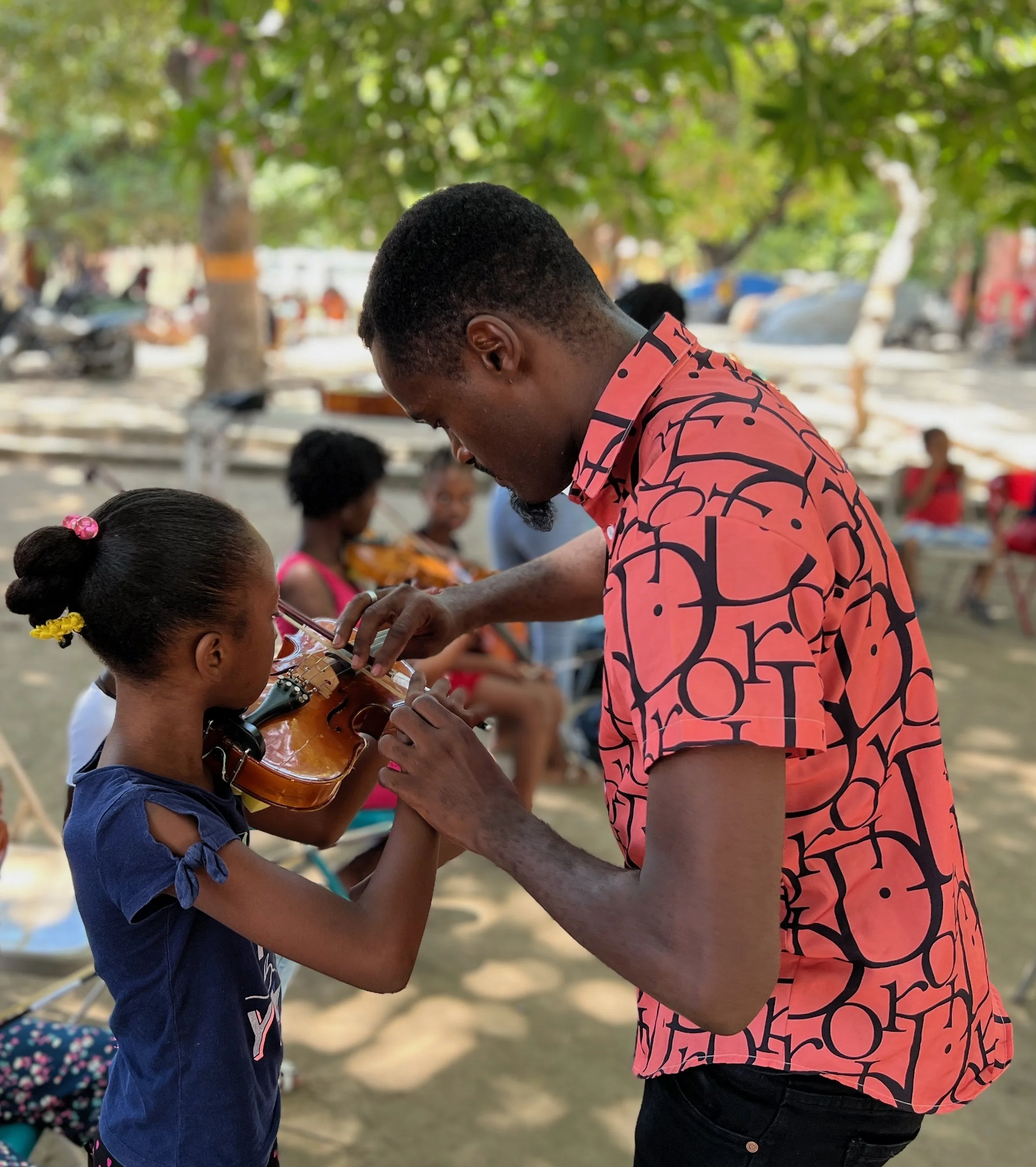
Each year, BLUME Haiti holds summer camps that benefit multiple programs. For instance, in 2023, 19 programs on the island were beneficiaries, impacting 2,000 students. These camps provide a bubble of stability with healthy food, clean water, and safe and hygienic conditions, which is a unique experience for many of the students. It gives them the chance to experience a different way of living, sparking their inspiration and connecting them with the ability to dream of a better future and develop their true potential.
The Haitian Orchestra Institute was created in 2017 and supports 100 of Haiti's finest musicians to receive intensive orchestral training from the musicians of the Utah Symphony (MOTUS) and their music director, Thierry Fischer. The ripple effect of these collaborations is incalculable, as the lessons these masters impart are disseminated throughout the entire country, given that most of the institute's members are also teachers themselves.
Since 2008, Lutiers Without Borders has been conducting instrument repair workshops on the island, while training local luthiers. This is the case for Tchoupy, a Haitian luthier who had the opportunity to live and train in Cremona. They also have collaborations for the repair of wind instruments, featuring internships in Belgium and France. These repair instructors also travel across the country training others.
Today, the program supports more than 5,000 students a year across 60 local music entities and stands as a clear example of what civil action can achieve. Janet continues to travel every year, involving more musicians and collaborators for the vindication of Haitian children and youth, who—like all children in the world—deserve the opportunity to experience music, discover their leadership, and work toward the development of their country, despite historical hostilities.
