The Hope of Afghanistan
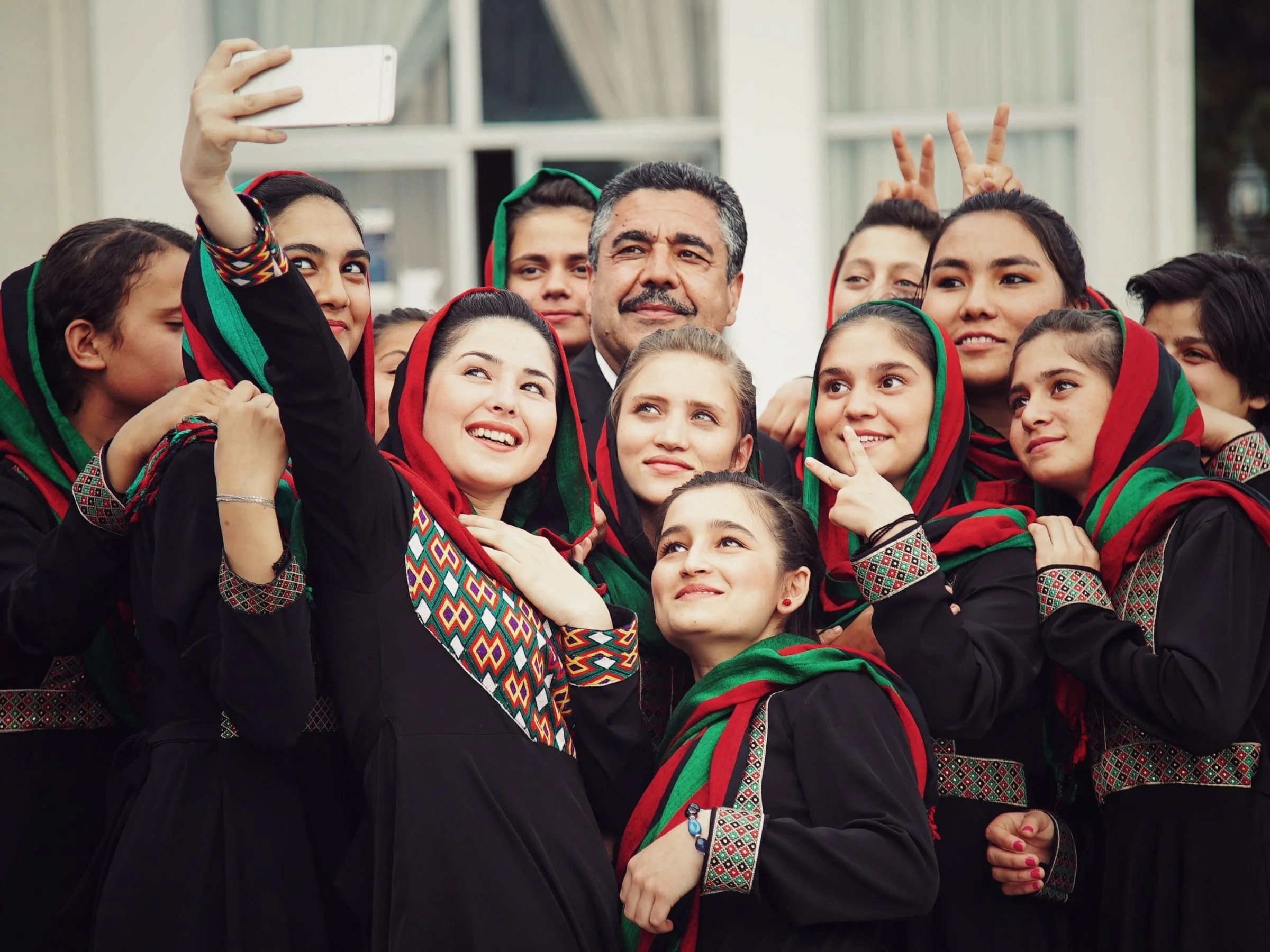
The Afghanistan National Institute of Music and the Zohra Orchestra
Music
The power of culture in general, and music in particular, for social transformation is indisputable: all around the world, we can find hundreds of projects demonstrating an unparalleled capacity for the education and integration of citizens. These projects, thanks to their extraordinary results, have received a significant boost over the last decade. While it is not possible to speak about them in general terms, as each context and community presents its own unique problems that require tailored solutions, it is possible to highlight one common characteristic: the strength of music as a counterposition (creation against destruction, beauty against misery; in short, art against war). Thus, paraphrasing Nuccio Ordine, we might wonder what music is good for. Beyond aesthetic, intellectual, and entertainment values, musical practice is a true act of revolution and social transformation. However, the argument that practicing or listening to music automatically creates better human beings is insufficient: we know all too well, for example, that some of humanity's greatest despots were also music lovers, enjoyed excellent education, and belonged to intellectual circles. No, music does not necessarily make human beings better, but it is undoubtedly a bridge, a bond that traverses individual emotions, opens a channel, and creates a connection where humanism, openness, and democracy can be sown. This is the case with the Afghanistan National Institute of Music (ANIM).
Geopolitics
At the end of 2019, amidst peace talks between the Taliban and Washington, Trump surprised American troops in Afghanistan with an announced Thanksgiving visit, during which, among other things, he demanded a ceasefire from the Taliban, while the latter insisted on the withdrawal of the remaining troops on Afghan soil. It is worth remembering that the United States operation in Afghanistan did not begin as an act of humanitarian intervention, but rather as an act of self-defense in response to the 9/11 attacks, an action that has led to more than eighteen years of continuous conflict.
Hope remains that these peace agreements will finally lead to direct negotiations between Afghanistan's leaders and Taliban representatives, although there is a natural fear among the population that the insurgent group will not respect the rights acquired through the constitution or the nascent democratic state achieved, particularly regarding individual freedoms, gender equality, and cultural rights. Afghanistan welcomes a peace agreement reached with dignity, but while it still needs the support of the international community and the United States, it demands that the human rights of its citizens be guaranteed.
After the Fall of the Taliban
Decades of war followed by Taliban rule devastated the musical culture in Afghanistan. Furthermore, during a five-year period between 1996 and 2001, music in all its expressions was completely banned. By the year 2009, an orchestra capable of performing the national anthem still did not exist in the country. To remedy this situation, the Afghanistan National Institute of Music (ANIM) was founded on June 20, 2010, thanks to support from the Afghan Ministry of Education, the World Bank, the United States Embassy, and the German Government, among others.
The Afghanistan National Institute of Music (ANIM)
ANIM began its work with about a dozen students, including one girl, an unprecedented milestone. Reinforcements soon arrived in the form of instrument donations, international teachers, volunteers, ambassadors, and representatives from the international community. Those who have had the good fortune to visit coincide in calling it "the happiest place in Afghanistan," and indeed, since its inauguration, it has grown to become recognized, both inside and outside the country, as the most important, effective, and successful project in terms of music education, leading intercultural dialogue in Afghanistan and the region. Through its growth and progress, it has proven that the role of music education is vital in the reconstruction of a war-torn country, as well as in the establishment of a just and democratic society.
ANIM seeks to provide a dynamic, challenging, and safe learning environment for all its students, regardless of their gender, ethnicity, religion, or socioeconomic background. In the Afghan context, the words security and gender hold special significance. It focuses especially on supporting children in situations of greatest vulnerability, such as orphans, street-working children, and girls. Its founding objectives, which initially seemed utopian and are now a reality, are to secure the musical rights of citizens, transform lives through music, revive and preserve Afghan music, train the next generation of music educators, and lead cultural diplomacy between Afghanistan and the international community.
The Visionary
Ahmad Sarmast is the son of Ustad Salim Sarmast, a renowned Afghan orchestral conductor. He began his artistic career in Afghanistan and expanded his musical training in Moscow, but upon finishing his studies, he realized with profound disappointment that he could not return to Afghanistan because what he calls "discrimination against musicians" had already begun, and he saw that citizens were being deprived of the fundamental right to express themselves freely through music. Despite this, he always dreamed of returning to his country, and as a musicologist, from a distance, dedicated his career to preserving what remained of Afghanistan's musical heritage. After fifteen years in Australia, in 2006 Ahmad began a series of trips to his native Afghanistan to see the state in which music had been left after the Taliban ban, as well as to set in motion the efforts necessary to return it to the citizens.
He found a devastating situation, as there were not even instruments in the country to play traditional Afghan music. The lack of material resources was not the only difficulty, nor the main one: the idea of music education did not find much acceptance among the population, and the enemies of music were found both in Parliament and across all social levels. Nevertheless, despite all the obstacles, in 2010, thanks to the support of the Afghan Ministry of Education, Ahmad began the mega-project of founding the first National Institute of Music in Afghanistan.
The first task was to find the necessary funding, as there was a shortage of everything: musical instruments, physical infrastructure, the curriculum, specialized teachers, and even the most basic supplies, such as music stands, strings, or reeds. The second major task was to find students, his first generation of musicians, the pioneers willing to join him in the task of reviving their nation. Ahmad began looking for them by visiting centers that sheltered street-working children, offering them music as a tool to heal their pain of loneliness and, in many cases, as a means to alleviate the suffering caused by the loss of loved ones as a consequence of the war.
First, he had to convince their relatives (when they had them), who were almost always women relying on the children's valuable economic income to ensure their survival. Ahmad knew that people have to survive, but he was also aware that everyone wants a better, brighter future for their children. Who would want their children to live off selling things on the street their whole life?
There he found students and families willing to support him. The children who started the project were quickly able to recognize the sense of dignity that playing an instrument granted them ; likewise, they received an education that offers an alternative to street vending. This aspect is particularly important, because the challenge, in addition to providing musical training, is to improve the social and economic standing of all its beneficiaries. Ahmad proudly explains that the children benefit not only from the healing qualities of music, but that it also allows them to develop a vocation that can assist in their professional growth and, consequently, their financial sustainability.
Ahmad closely monitors the training and family circumstances of each of his students, in order to make the best possible use of the limited resources he has. His dream was to be able to form an orchestra with enough skill to perform musical pieces from the Afghan repertoire, arranged through notation and according to the standards of traditional Western music. When constantly asked why Afghanistan needs Bach, Beethoven, or Mozart, Ahmad argues time and again that great composers and creators do not belong to Europe alone, but are a shared heritage of all humanity, and that Afghan children and youth have the right to access the musical heritage of the world and to be educated to appreciate it.
However, he points out that all efforts put into rebuilding and revitalizing Afghan music must focus on those who will be the future musicians: the children and youth of Afghanistan. By investing in young musicians, they are not only sowing the seeds for long-term sustainable growth in music and Afghanistan's various cultural sectors, but at the same time, they are repairing and honoring the country's musical heritage, which is deeply cherished by Afghans.
Gender Equality
Although music was banned for all citizens, the Taliban regime strictly vetoed the education of women in any area of knowledge, and their social interaction was confined to the boundaries of domestic life. Currently, women can receive an education, though a high dropout rate still exists, especially in rural areas, as from adolescence onward they are not supposed to be in public without the company of a man, which hinders their attendance in class. Today, only 6% of women in Afghanistan hold a university degree, and more than 20% suffer from illiteracy. Furthermore, performing music was a space traditionally reserved for men.
ANIM has been clear from the very beginning that all boys and girls should have access to music education regardless of their gender. Therefore, it has made an even greater effort to find and attract girls to the project, recognizing that they face the greatest challenges in the country. Each year, they ensure that 50% of the institute's spots are reserved to be filled by girls.
The girls' interest in music education has always been evident, but they initially resisted due to the social stigma they could face and fear of their families, who might judge them for wanting to dedicate their time to male activities. Ahmad launched a campaign to meet with the girls' parents or legal guardians to try to convince them as well of the major educational revolution and the enormous opportunity being offered to their daughters. Currently, the institute has one hundred enrolled female students and is home to the first all-female musical ensemble in the history of Afghanistan.
The Zohra Orchestra
One year after the inauguration of ANIM, the Afghan Youth Orchestra was formed, composed of both boys and girls. After five years of intense work in Kabul, and on the initiative of the young female students, the Zohra Orchestra was born in 2015—the first all-female orchestra in the history of Afghanistan, named in honor of the Persian goddess of music. The members of this orchestra generally come from different rural regions of the country, traveling to Kabul to study at ANIM. They are the only women in their families and communities who have been able to access music education in the last thirty years.
Within this group are the first female orchestral conductors in the history of Afghanistan: Negin Khpalwak and Zarifa Adiba. At just over twenty years old, Negin has already faced death threats from the Taliban and her own family. As a woman born and raised in a traditional Pashtun community, she hid her passion for music until one day she dared to confess it to her father, who has resolutely supported her. However, other members of her family—clinging to the idea that women should not attend school, be alone, or, worse yet, learn music—believed that Negin would only bring shame upon her family.
The facts have proven otherwise. Zarifa had to face similar challenges, but she holds the conviction that if she could change her family, the other girls will be able to change theirs, and in this way, step by step, the great transformation of Afghanistan will occur.
The orchestra has performed on various international stages and at world-class events such as the 2017 World Economic Forum. Upon returning to Kabul, its members are usually received as the heroines they are: they are awaited by their families, communities, and friends, as well as by poets, intellectuals, teachers, and anonymous citizens who see them as the greatest symbol of the Afghanistan they wish to maintain and continue. Thanks to media coverage and the enormous success of the project both nationally and internationally, many of their families have come to understand that the work they perform is important and that, after all, playing music does not seem to be such a bad thing.
The girls of Zohra are a tremendous symbol for other women in Afghanistan (and the rest of the world) who live under adverse conditions of repression and submission. And although they enjoy the support and admiration of a large part of the population, they remain targets of attacks by fundamentalist groups, forcing the reinforcement of their security, especially during their concert performances. Nevertheless, the journey of this experience has made them strong women, leaders, confident in their abilities. Their expressions reflect their deep determination. They all agree that the orchestra has brought a great deal to their lives, above all the lesson to never give up.
Heroes
Not everything is success and joy in the development of ANIM. On December 11, 2014, at the French Cultural Center in Kabul, during an orchestral concert, Ahmad Sarmast was the victim of a suicide attack. In the attack, perpetrated by the Taliban, two people died. Ahmad was wounded and transferred to Australia, where he had to undergo several surgeries and endure a lengthy convalescence. The Taliban justified the attack, explicitly directed at Ahmad, by accusing him of corrupting Afghan youth.
Given the severity of the events, activities at ANIM were suspended for a month. Ahmad was fearful that the students and teachers would decide not to return and would abandon their dream out of fear. Fortunately, all the boys, girls, and teachers returned to the classrooms.
"The enemies of Afghanistan have made a big mistake," Ahmad states, "they have made us more resolute, more committed ; furthermore, we now know that the work we are doing makes them miserable."
Ahmad returned to Kabul immediately after his recovery, despite his family's insistence that he remain in Australia. The Taliban claim that they will continue actions against him and against the school. He has suffered two more attacks, one in 2015 and another in 2017.
Democracy
For Ahmad and his team, music is the best tool to defeat the Taliban. First of all, their ideology must be dismantled by providing the citizens of Afghanistan with alternative ways of thinking ; to achieve this, without a doubt, the best way is to generate openness through the arts, culture, and music. The soft power of music acts as an incredibly powerful weapon to be used against radicalism and fundamentalism.
For ANIM, it is clear that democracy does not consist of having a certain number of political parties, but rather of ensuring the freedom, educational, cultural, and musical rights of its citizens. Thus, without music, a civil and democratic society cannot be built. For this reason, ANIM offers free education to all its students, as well as scholarships so they can cover their living expenses. These benefits are possible thanks to the support of the Government of Afghanistan, international resources, and the commitment of individual citizens, Afghan entrepreneurs, and countless institutions.
The Future
On June 20, 2020, the tenth anniversary of the Institute will be celebrated. June is planned as an entire month of celebrating the return of music to Afghanistan, and with it, the freedom and musical rights of its inhabitants. Ten years of work are bearing fruit with more than three hundred active students at the Institute (among whom are one hundred girls), the formation of the Afghan National Symphony Orchestra, the Zohra Orchestra, and dozens of international tours and concerts in the world's major auditoriums.
The goals set for the near future match the achievements already attained: the opening of the first auditorium for symphonic music in Kabul is expected this year, as well as the creation of three new music institutes in the provinces of Herat, Mazar-e Sharif, and Jalalabad. For their part, ANIM's upcoming objectives are ambitious, coherent, and forward-looking. They are currently working to secure funds for the construction of an underground dining hall that can be used as a bunker in case of attacks, increasing aid for students living in the AFCECO Orphanage, and finishing the construction of girls' dormitories on campus.
On Hope and Fear
For Ahmad and his army of musicians, fear does not exist, as it is absorbed by the deep hope of refounding their nation on the foundations of pluralism, freedom, and democracy. In his own words: "To live in fear is to give up, and the Taliban want to force people to give up."
When Ahmad speaks of the refugee crisis and Europe's attitude toward them, he understands that it is the fear of difference that people carry in their hearts. He invites us all not to let ourselves be defeated by it; everything that is happening is an opportunity. Therefore, his message is clear for young people in developed societies: they must be grateful for everything that is guaranteed to them, because in other parts of the world, it is necessary to risk one's life to obtain a music education.
How far are you willing to go for your dreams?
ANIM welcomes a future peace agreement that respects the dignity of Afghanistan. However, amid the talks, there is distrust regarding the possibility of the Taliban's return and their access to power. That is why the great revolution of these heroes and heroines is to remain standing and make music, more and better. They are the symbol of hope that demonstrates the power of bringing people together to work toward creating a lasting state of peace in the nation.
Location: Scherzo: revista de música, ISSN 0213-4802, Año 35, Año 360, 2020, págs. 18-21
